
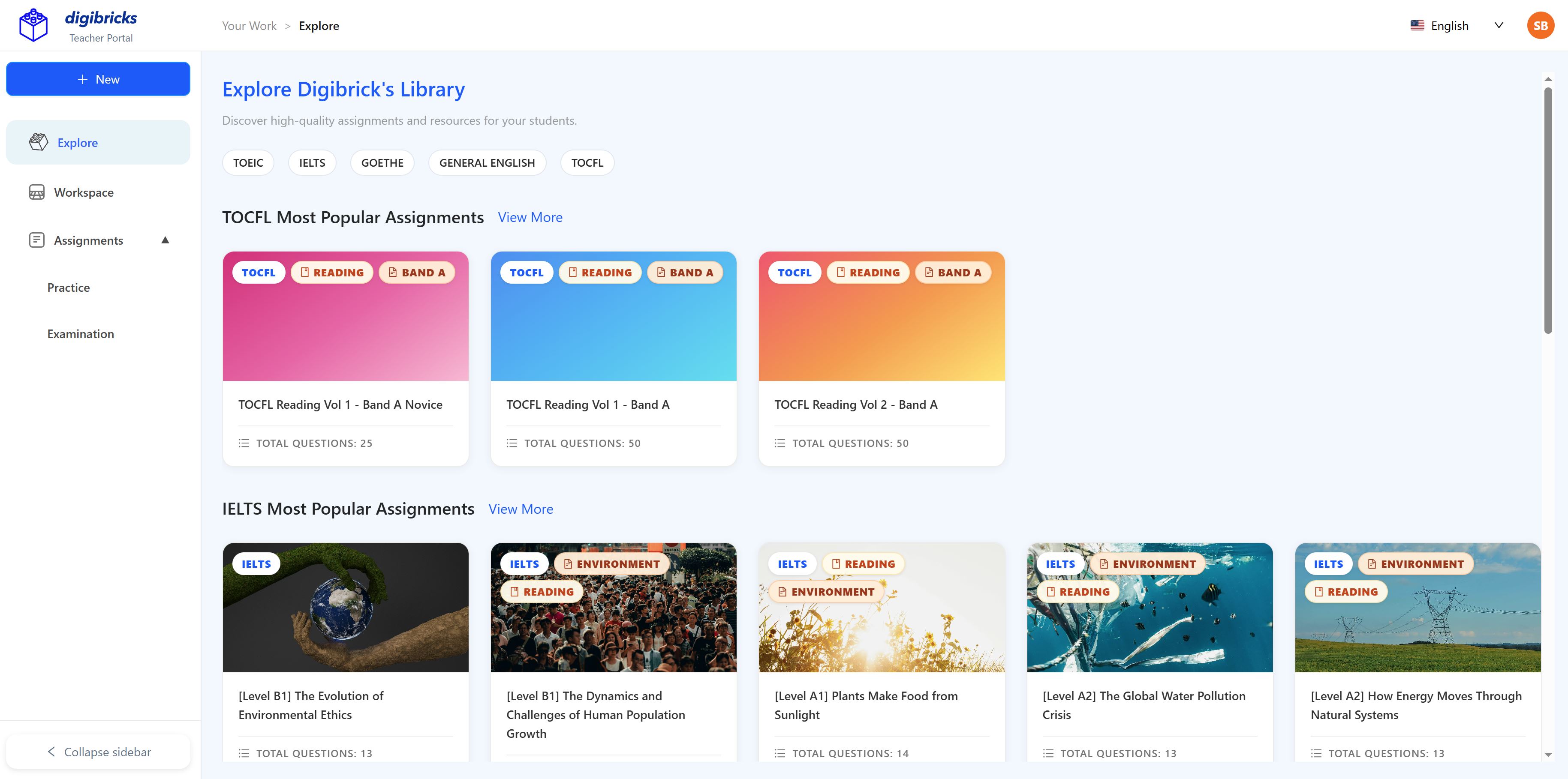
Explore materials
A rich library of practice tests and materials ready to use.
Create, assign, grade, and edit assignments online in one seamless workflow.
Explore materials
A rich library of practice tests and materials ready to use.
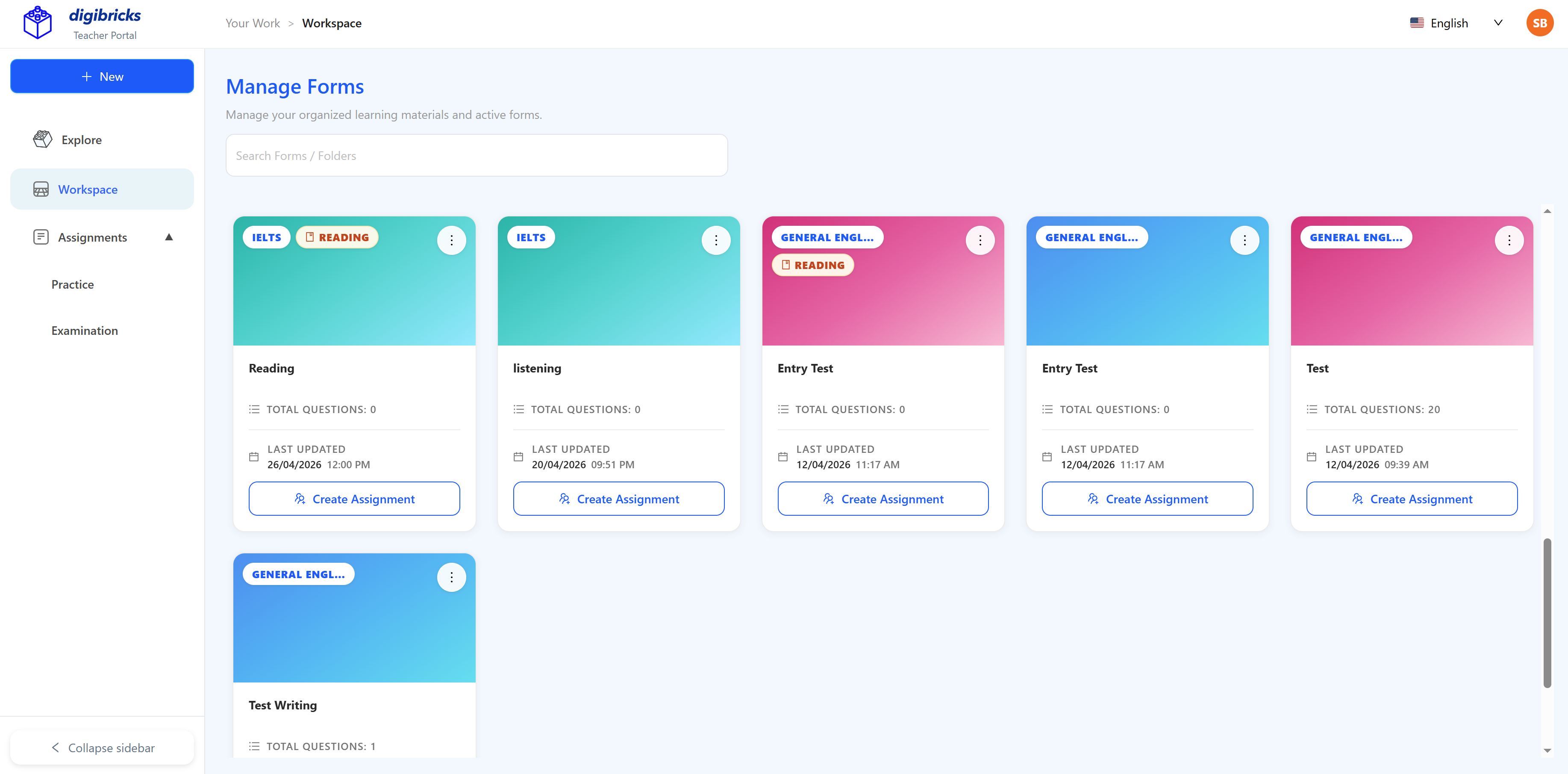
Teacher workspace
Organize your materials, assignments, and question banks neatly.
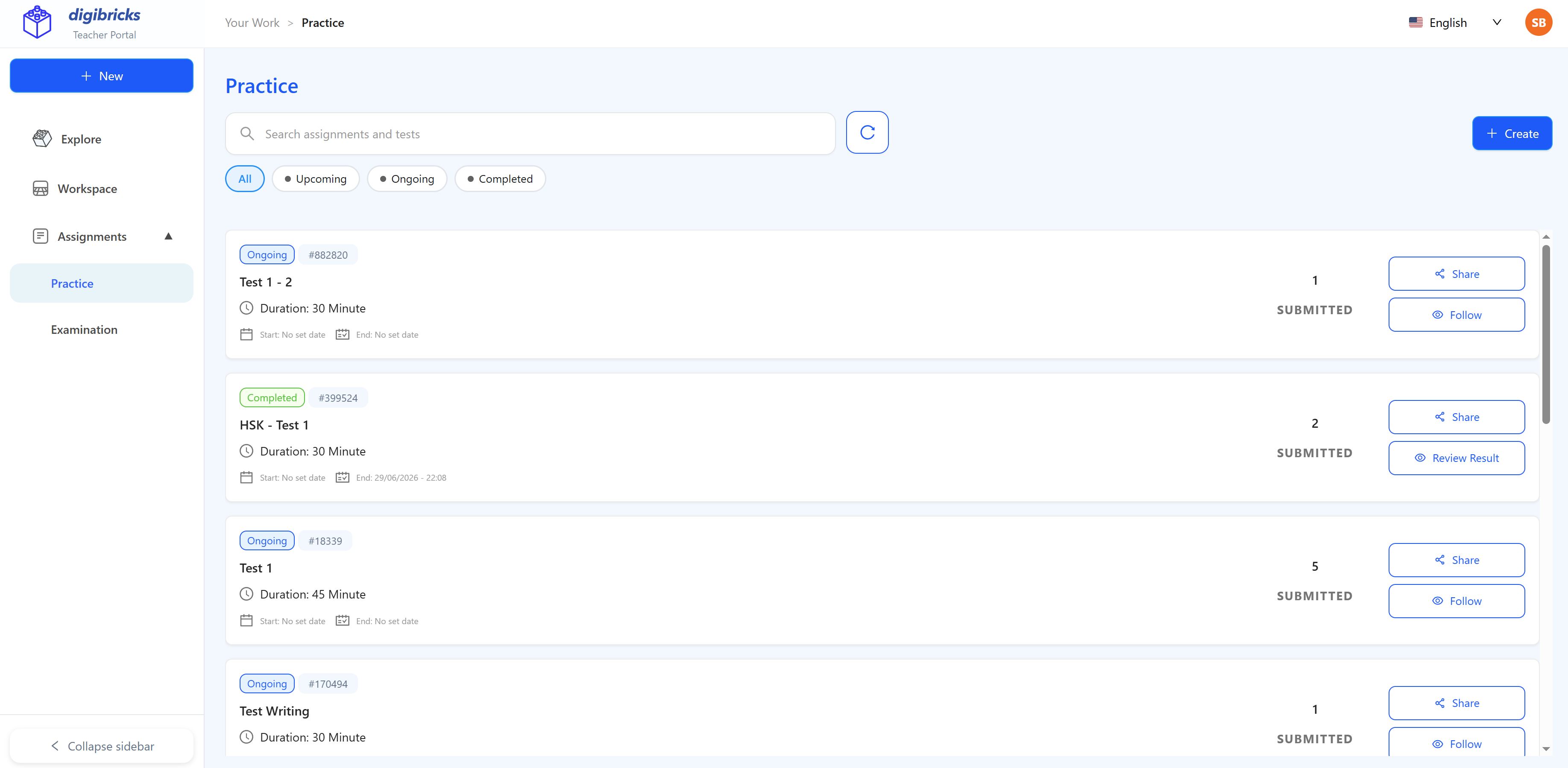
Assignment list
Track submissions, share links, and open reviews faster.
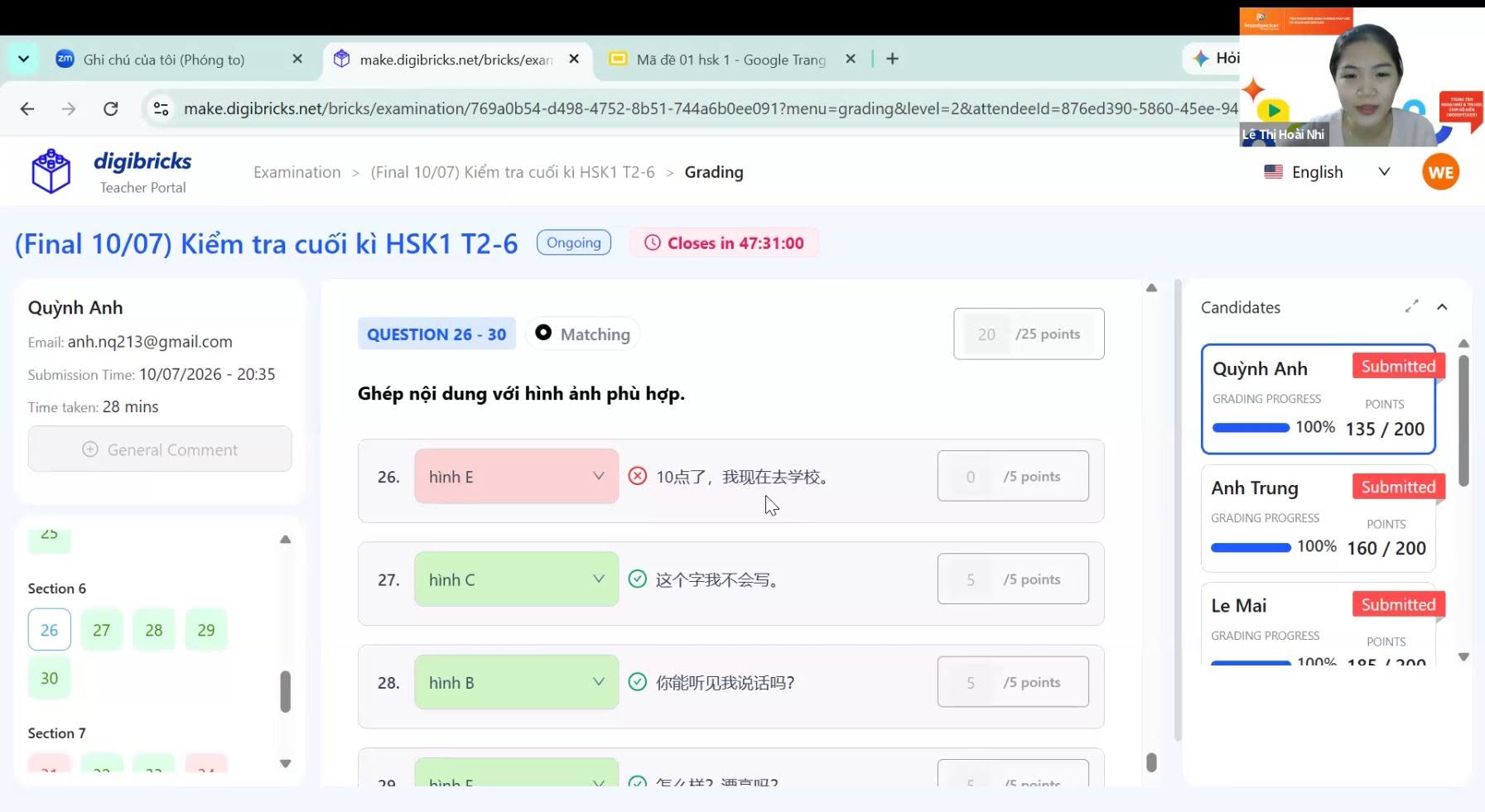
Online grading
Review and correct student submissions easily, right on their work.
From reading passages and quizzes to detailed class reports in one seamless teaching workflow.
AI Test & Passage Generation in 30s
Generate structured IELTS, VSTEP, TOEIC, HSK passages using AI. Review and edit every single question draft before saving.
Shuffled Assignments & Anti-Cheating
Automatically shuffle questions and answer choices for each student. Enable detailed answer explanations upon submission.
Itemized Error Matrix & Fast Grading
Automatically grade each section instantly. Click student names to inspect itemized Correct/Missed error grids and export CSVs.
AI Assist
Worried AI might generate inaccurate tests? Digibricks starts from your own materials, drafts questions around them, and lets you review every change before anything is saved.

Manage materials, assign, and grade with no limits or ads. You only pay when you use AI features.
Free Tier
Best for trying AI with your own materials.
30,000 AI credits / week
Pro Tier
Best for teachers creating AI tests every week.
2026 promo - 6 months for 36 USD
200,000 AI credits / week
Jul 12, 2026Case study
How WOODPECKER uses Digibricks to assign work, grade, and review answers live in class
A practical case study on how WOODPECKER uses Digibricks to organize assignments and review student mistakes live in class through the grading screen.
Apr 26, 2026IELTS
AI Form Generator for IELTS Reading: a fast, reviewable workflow
Generate a 500–600 word passage, mix question types, and keep quality control with Accept/Reject before committing.
Apr 20, 2026Exams
From form to exam in 5 steps (with grading and reports)
A practical checklist to go from a question bank to a timed exam—and finish with a report you can share.
You can use all basic features of Digibricks completely for free. Only AI features are paid.
Instead of spending 30-45 minutes typing manually like in Google Forms, Digibricks lets you turn your documents (PDF, Word) into a test in ~10 seconds. You can also assign one test to multiple classes easily, and switch between Practice/Exam modes with timers and full submission tracking on a single screen.
Yes, you can review and grade directly on the students' submitted work, and students will be able to see your feedback on their end.
Currently, Digibricks is only available for end users like teachers. Institutional plans will be available in the future. If your center or school is interested, please email us at hello@digibricks.net to get early access when this feature is released.
You can contact Digibricks via email at hello@digibricks.net or through our Facebook Community Group at https://www.facebook.com/groups/1572277458015011